The Forgotten Purpose of Education

As United States policy makers set out to raise the standards on education by implementing the new Common Core State Standards (CCSS), I often think we have forgotten the purpose of education. Legislators have been convinced by “Education Reformers” that raising the standards will make our country competitive again in national tests and the rankings that follow. States, school districts and teachers have gotten caught up in attempting to teach the numerous standards each year. Many of us fail to cover it all. The argument made has been: “We don’t want Mary Poppins teachers”, you know those who teach a few of their favorite things. “We want to know that all students have the same educational foundation”, often called guaranteed and viable. Other education educational buzz words often used to describe new curriculum are rigorous and relevant.

When reading about the new CCSS non-educators often feel it is a needed change, especially with all the negative press education has received lately. Many educators have spoken out against the CCSS, arguing that it is a sign of corporate take over to education and takes away from the arts, leaving education  dry and  scripted. Really lost in all of this banter is the TRUE purpose of education.

Is education supposed to:

  • Guarantee that individuals know curriculum?
  • Create employable students?
  • Enable students to be college ready?
  • Solve a quadratic equation?
  • Create a graph?
  • Use the scientific method?
  • Speak a foreign language?
  • Create an App?
  • Write a song?
  • Paint a Masterpiece?
  • Build a house?

The answer is simple yet lost in all of the discussion about education lately. Education is for ONE thing and ONE thing only. Since the dawn of time education has been about LEARNING to LEARN. Once this process is completed we can do all of the above if we so desire.

Think about it: Steve Jobs, Bill Gates, Mark Zuckerberg, and Steve Wozinak did not follow a “Common Curriculum” on their paths to greatness. Mozart, Picasso, and Jackson Pollock would have never created such wonderful works if their learning bound by a “common” content.
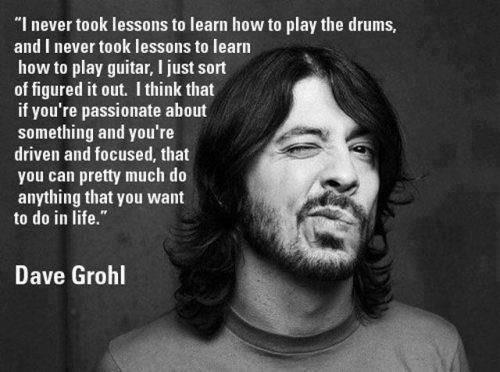
Schools need to become a place where students learn the basic skills. Then they are allowed to  explore topics pushing their teachers to help them. This is the discovery that four and five year-olds have, the endless questioning and excitement. You know the ones parents get tired of and answer with BECAUSE!   Schools should not be on clocks, expecting everyone to discover their path by 18. Some get to the road much quicker and others might like to wander in the woods for awhile.

A teacher will know they have done their job when their pupils finds answers to their questions without assistance.

Remember schools can’t teach all the skills needed for employment. Too many jobs and skill sets are changing too fast. I went to high school in the 1980’s: No internet and few computers. Look at me now writing a blog!! Once we know how to learn we can do anything we desire!

Let’s return education to its true purpose: TEACHING how to LEARN!!

Thanks… Focus on positive and let the negative fall away!

It is that time of year, where you reflect and give thanks for all the positive things in your life. As a teacher it has been easy to get caught up in all the negativity. The profession feels like it has been under a relentless attack lately, but there is so much to be thankful.

  1. Professional Learning Network- Such a positive group of teachers can be found on social media. When you are feeling down, have a bad day, they are always there to pick me up. I have yet to have a negative experience with my PLN. You engagement me, challenge me to grow and do better, give me comfort after a long day and never let me settle for being good.
  2. Collaboration- Teaching is in a time of transition from teachers being alone in rooms doing their own thing to a model where teachers collaborate to create awesome learning experiences for their students. All who have collaborated with me, thank you for opening you minds and sharing what you do in your classrooms so I can be a better teacher.
  3. My Administrators – They get it! Knowing how to comfort the afflicted teachers and challenge the comfortable. Always striving to exhibit the traits teachers desire. Thanks for being humans, not robots, striving for the best learning environment possible.
  4. #MichED – Thanks to the vision of Jeff Bush for spearheading the efforts to start this group of Michigan teachers. You all inspire me. The weekly chat is just the tip of the iceberg. Meeting many of you face to face has greatly enhanced my learning when attending Edcamps and conferences. Looking forward to the Connected Educator Unconference in Boyne City in January to meet more of you.
  5. AMLE– Thanks for the support with #mschat. Everyone at AMLE has an incredible energy and enthusiasm towards teaching students in the middle level. The passion that you bring out in members inspires. I can’t wait till we collaborate again. (Great chat coming in January).
  6. MEA– Protecting the risk taking teachers is a hard job. Many of us would only be good without the knowledge that the union is there to protect and fight for teachers rights. Being a union person is not a glamorous job (similar to teaching), it has many critics. The job they do, helps us all be better teachers.

Enjoy your break with family and friends. Focus on all the positives we have in life and teaching. Be the change you wish for in education.

Do our Standardized Assessments fail our students?

As students here in Michigan are in the middle of the Fall cycle of the Michigan Educational Assessment Program (MEAP), I have to ask if these tests are doing what they were intended to do? The tests were originally designed to measure students academic achievement. Now the test are also used to measure the quality of school districts and as teacher evaluations have changed the data can be used to show student growth (or lack there of).

As I administer the tests this week I have really thought about how they work. First these test disrupt the normal school atmosphere, changing schedules. Announcements are made to asking students to do their best, get sleep and eat breakfast (notes also sent home to parents). Of course don’t we want students to get plenty of sleep, do their best and eat a proper diet every day? Of course but many school place an extra emphasis at this time of year. Many students stress about their performance on the test. Wanting to do well and try their best. Others (often with parental support) don’t care and see testing as an annoyance, rushing to finish so they can “do nothing” for the rest of the testing period. Since the tests are almost entirely multiple choice, they are limited in the type of questions they can ask. Often requiring students to know specific vocabulary or have content background knowledge.  This style of assessment has not changed since they were created. Has learning and teaching changed?

Teaching has changed so much!! Teachers spend time creating relationships with students to understand their learning style. Then learning activities are created to meet the individual student’s needs. Students are given choice in assignments and allowed to voice their preferences in how demonstrate knowledge. Many teachers give students freedom to express their learning in many different styles. Teachers are trained in questioning techniques to drawn student’s knowledge out. Most middle school classrooms rarely use the Multiple Choice format (except to practice for standardized tests).

Colleges have seen the flaws in relying solely on standardized test scores for admissions. Isn’t it time for K-12 education to create a better assessment system to measure student achievement? One that reflect best teaching practices?  We can do better and should.

Michigan Council of Teachers of English 2013 Presentation

On Friday Oct 5, 2013 I will be co-presenter at MCTE Conference. I feel luck to have collaborated with my partner Kattie Hogan in linking science and literacy.  Our project was just the beginning of fusing science instruction with a focus on literacy skills. Our goal is to create independent collaborate learners. Not there yet but work towards it every day. Below is the Presentation:

Homework what is it good for? …Dependency?

There are many views in education about homework ranging from : Necessary for success to an evil tool from the old days of education. Parents, teachers and administrators are on both sides of the debate. Students not surprisingly are pretty much united against homework.

So the burning question is: What is Homework Good For?

The easy answer comes from students:

  • boredom

  • repetition

  • frustration

  • wasting time

  • busy work

These are not the desired outcomes when a teacher assigns the work, but what happens. Is something lost in translation? Most assigning the work feel it is practice that is reinforcing the skills learned in the classroom. Not being concerned by the students perception of the work. Recently, I have noticed a trend where teachers profess at Open House that they don’t “give” homework, followed by a list of weekly at home expectations that include: Math practice (Online w/ TenMarks or IXL), spelling practice (Spelling city) a weekly reader and daily independent reading. These same teachers also expect student to finish any work not completed in class at home. All this work is done at home, so what is it if not homework?

Parents expect homework. They use homework as a gauge to measure what is going on in the classroom. It informs them of what learning is happening in the classroom. Working on it with their child can give them an idea of how their child is doing. Parents often mistaking the lack of homework for success by their student in a class. Parents also feel that IF their child does the homework it should be reflected in their grades, no matter how proficient they in the subject area tests. Of course teachers can have a hard time knowing if the student or the parent completed the homework.

Traditionalist feel that homework is practice of the vital school skills learned in class. How are our student going to learn math, spelling, vocabulary, etc. with out this practice? Practice is helpful. Should our students be practicing without a coach? DO they all need to practice the same material? How much practice do they need? Does practice count in the big picture?

Instead of giving homework, teachers need to teach student to identify their strengths and weaknesses. Give their students the tools to allow them to decide what needs to be practiced and how to practice. Then be available during practice time to help students hone their skills. By making this fundamental change, students will still have homework, but they will be the ones deciding what they need to do and when it needs to be done. Freeing up time for family and extracurricular activities. It will also end the homework dependency our society has created over the past few decades!

First Monday- Advisory Lesson to Engage Students

Yesterday was my first Monday of the school year (last Monday was a Holiday). Most students don’t like Mondays, it means the end of living on their terms. No laying around the house, watching TV and playing video games while eating junk food. When I walked into my classroom for advisory at 8:10 I found many heads laying on the tables and blank eyes staring back at me. The students weren’t ready for the school day, heck many weren’t fully awake yet. After taking attendance, I felt I needed to do something to get everyone’s blood flowing and engaged for the day. So, I turned to one of my children’s favorite wake up songs Wake Up (By Verve Pipe a band I enjoyed in bars as a college student)

The lyrics seemed to connect to the students. Heads lifted from the desks, if not only in wonderment about what was going on. Eyes started to stare in wonderment towards the from of the classroom. When it was over, I was ready to pass out an article to discuss sleep deprivation in teens. I noticed the students weren’t quite ready to get to work. Blood was flowing but not enough. Then I remember a video Adam Bellow   had share at MACUL Conference back in March.

At first a few students yelled out,”Not Rebbeca Black!!” But then they realized it was something different. A few started to snicker, others stared at the imagines in disbelief of what they were seeing. Was a teacher really playing this? As the chorus started to play “Its Monday …” I sang along. A few student looked at me and smiled. Realizing that school does not have to be a “drag” students started singing along and a select very comfortable few even got up to dance. 

Afterwards we discussed sleep and eating habits to help students get into the groove with school.

If I felt this was an awesome lesson, I would have posted it last night. It wasn’t till today in advisory, that I realized how powerful it was. As I was taking attendance, with the plan of watching CNN student news and discussing Syria, a hand popped up. “Mr Bloch, are we going to listen to the Wake Up song?” A few yeahs echoed from behind the questioner. Could I deny students a 3 minute song? Of course not. It made most of the classes day (Can please everyone). Student sang along and were moving. It really created positive energy to get the day started.

Think about finding hitches that get the students up and moving to start their day!