I am working on a project to expose students to more careers. There will be a weekly reel discussing a career with someone working directly in the field. The discussion will center on the type of work done, the skills required, drawbacks to the field, and why someone might choose this career path. The goal is to expose students to new fields that they might not be familiar with. Most middle school students are unfamiliar with various career fields. When asked about their future career, they will either respond with “I don’t know!” or state one of the obvious careers, such as doctor, lawyer, police officer, firefighter, actor, athlete, influencer, or entrepreneur. Students may be familiar with their parents’ careers, but often have limited knowledge about others and what it takes to succeed in their fields.
I will ask 5 student-friendly, curiosity-driven questions to learn more about their career:
If you could give one piece of advice to someone who might want to do your job in the future, what would it be?
2. What made you interested in this career, and how did you know it was the right fit for you?
3. What does a typical day at your job look like?
4. What skills do you use the most in your work, and how did you develop them?
5. What is your favorite part of your job, and what is the most challenging part?
If you’re interested in sharing your job experience with View Careers, please complete this interest form. Give the project a follow on Instagram @view_careers
Excited to attend MACUL25 this year and connect with incredible educators. It has been a few years. The last MACUL I attended in person was the conference that was shut down due to COVID. I can’t wait to see other #miched educators and discuss education. I have been so focused in the classroom, I have forgotten how meaningful outside connections are for educators. I hope to see you there.
Grades are temporary positions along a continuum at best. – Rick Wormeli
As I read Rick Wormeli’s latest post on AMLE’s website about grading, I ran across this quote. Grades are temporary!
They reflect just a moment in time. This moment can be impacted by so many events going on in life. It could be a great day where the learner ate a full breakfast, the parent drove them to school on time, and the locker opened quickly as friends greeted them. The night before, preparation was completed for the assessment, and an early bedtime was achieved. The teacher greeted them at the door with a smile as they walked in prepared with a pencil in hand. In this scenario, 10 variables impact the student’s outcome in learning.
Would the grade be different if a variable was changed? Students, parents, and schools must stop putting so much weight on temporary grades. Using a grade as a descriptor of a student is meaningless. What does “an A student’ mean anyway? The focus must be on what happens after the grade feedback is given. Do the students explore further? Do they examine errors and look for corrections? Or do they shruggle their shoulders and say it is good enough?
The focus on the temporary grade takes away from permanent learning. Learning is the goal of education, not grades. Schools need to find a way to shift from the temporary to the permanent. When talking about students and learning, grades should not be the focus. Focus needs to be on traits. Does the learning as questions? Explore ideas deeper? Seek to fix own errors? The feedback systems should include a dialogue about improving work or exploring ideas further.
Yes, grades are the quick and easy feedback system society is used to seeing. Grades are everywhere we look. There is a need to shift away from them to promote the learning process and give students better feedback on where they can improve. As a classroom teachers I have heard “but they are an A student” when discussing students learning in my classroom. I have tried hard to focus on skills and areas that need improvement. Sadly parents seem to focus so much on grades. How can we help parents understand grade carry little potable meaning? How can we get the focus on LEARNING?
The evolution of teaching: there is a narrative out there that says schools haven’t changed since they were invented, but they have in many ways. We started with one-room schoolhouses and one teacher with all grade levels. The school evolved to grade-level classrooms, adding chalkboards and textbooks. Eventually, we had overhead projectors and transparencies. Teachers used to follow textbooks page for page; now, teachers create materials constantly to engage the learners. Classrooms used to be full of dittos that required rote memorization; directly, teachers engage students in higher-level thinking skills. Technology is quickly changing the school environment to individualize further and engage learners. Education has been evolving regularly since I started teaching in 2001, COVID has caused it to hit hyperdrive. My video dives deeper.
As educators, we must shift the narrative to make the public understand what is happening in schools. It was pointed out to me recently by Pete VanKempen on Twitter that the current narrative of “Unlivable wage” and “Undesirable hours” makes the non-teacher crowd dislike educators. He pointed out it meant “Teachers don’t live within their means,” and teachers don’t value all time off compared to most hourly workers since “most have June, July and some of August off along with all major holidays.” Currently there are few students going into education and many current teachers looking for a path to greener pastures. How can we shift the narrative to allow for meaning discussion about redefining the teaching profession to make it more attractive to future educators?
Wage
Is a teacher’s wage unlivable? Well, no, in most districts in Michigan, teachers start around $35,000 to $40,000. This is equivalent to $17 to $20 per hour for a 40-hour-a-week job. So a starting teacher makes about what kids make working summer jobs these days with no opportunity for overtime pay. Do teachers work 40 hours a week? “On average teachers are now said to be working 54 hours a week. The typical 40-hour teacher workweek is no longer enough to cover staffing shortages and tackle ongoing tiffs between parents and teachers.”- Baumgartner. Teachers work many extra hours outside of the school day, grading, planning and communicating with families. These hours are often overlooked by the general public. Teachers often try to accomplish all their work during their contracted school day which can be very difficult at best at worse it can mean instruction can be subpar. Teachers often talk about the “pay penalty” because “teachers earn 23.5 percent less than comparable college graduates.“- Will. When teachers compare their salaries with their peers from college from different majors they feel completely under paid with unlivable wages if they try to live similar lives.
Work Hours
At first glance, teachers’ hours look pretty similar to bankers’ hours. My contract hours are from 7:50 to 3:05 for 7 hours and 45 minutes daily. Most teachers’ contracts have similar hours with the goal to reach 1098 instructional hours in 180 days. Parents see teachers walking in when dropping off their kids and walking out during pick-up after school. How is the average number of hours 54? Well, contract hours are predominately used for instruction. Teachers have little time for planning, grading, copying, collaborating, learning new skills, or communicating with families. This work is done “off the clock.” Teachers often come in early or stay late to get this work done. If you watch teachers leave the building, they usually carry multiple bags of work to get done. Does every teacher put in extra time? No, but the most effective ones do. Looking at hours; teachers work roughly 2,160 hours during year (54 hrs X 40 week school year) vs a 40-hour work week 2,000 hours ( 40 hrs X 50 weeks). So even with 10 week summer break and 2 weeks during the year teachers do work more hours than a year round employee who works a 40 hour week.
Work Conditions
In most jobs, the employee has many freedoms. Freedom to take a break, call, go to the bathroom, or have a snack. In education, these freedoms are nonexistent. When a teacher is teaching, they are “ON,” making decisions every second. Teachers must present lessons, monitor learning, prescribe interventions, and manage behaviors. During passing time between classes teachers must continue being attentive and observing behavior in hallways and their classroom with a possible quick run to the bathroom. The only reprieve educators have is during their planning period or lunch. Although most teachers have long lists to accomplish during these short breaks between teaching. When educators see other professions working, it is clear their time is in much higher demand.
The Shift
Education policy needs to fix pay, flexibility of hours, and working conditions to recruit and retain new educators. Without this shift, college students will see the struggles with going into education and choose other careers with better pay, flexibility, and working conditions. It is clear teachers can’t just openly complain about these issues without further explanations of their perspective. On the surface, these issues seem like the general complaints of every laborer, but these are the 3 main reasons teachers leave.
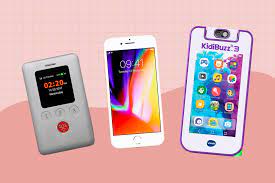
Cell phones have become an integral part of our daily lives, and for many students, they are an essential tool for communication and entertainment. However, there is a growing concern about the use of cell phones in schools. Some educators and parents believe that cell phones should not be allowed in schools, as they can be a significant distraction and disrupt the learning environment. In this blog post, we will explore some of the reasons why cell phones should not be allowed in schools.
Distraction
One of the most significant concerns about cell phones in schools is their potential to distract students. Even when students are not actively using their phones, they may be distracted by notifications, text messages, and social media updates. This distraction can make it difficult for students to focus on their studies, leading to lower academic performance and poorer learning outcomes.
Cheating
Cell phones can also facilitate cheating, as students can use them to access information during exams or other assessments. This not only undermines the integrity of the assessment but also hinders the development of critical thinking and problem-solving skills that are essential for academic and professional success.
Cyberbullying
Another concern is the potential for cyberbullying. With the rise of social media, students can use their phones to bully and harass their peers, either anonymously or under a false identity. This can have a devastating impact on the mental health and well-being of the victim, and schools must take steps to prevent such behavior.
Health risks
Finally, there are health risks associated with the use of cell phones, such as eye strain, neck pain, and other musculoskeletal disorders. Students who spend extended periods using their phones may also be at risk of developing addiction, sleep disorders, and other mental health problems.
Conclusion
In conclusion, while cell phones have become an essential part of our daily lives, they should not be allowed in schools. They can be a significant distraction, facilitate cheating, enable cyberbullying, and pose health risks. Instead, schools should provide students with alternative means of communication and access to information, such as computers and other technology, while also educating them about responsible digital citizenship. By doing so, we can create a safe, healthy, and productive learning environment for all students.




 Sweat to Inspire