What is the goal of testing and data?

Data is a key component in education. Schools need to know where students are in their learning so instruction can be designed to meet students learning needs. Schools have always used data. We use data to help determine grades, know reading levels, math levels etc. Recently the government (State and Federal) has arbitrarily decided that the data schools have been collecting should be used to measure the effectiveness of teachers. The test design corporations, such as Pearson, create tests with little teacher input, to sell to states for the purpose of measuring students against a “standard”.  If students don’t achieve the standard, teachers can be deemed ineffective and eventually lead to the loss of their teaching position if low scores persist. Government has mandated this value add measure, with the desire to hold teachers accountable for their student’s learning. All the while placing little to no accountability on the student or parents for learning achievement.

So what is this data really? Is it a summary of everything a student has learned? Does it measure higher level thinking? Quite frequently the data is just a mere snapshot, of where a student is performing at a certain spot in time. Is it right to assume that a picture of a 75 degree sunny day is the norm for a Michigan Winter? No, but it happens. As well as a 30 degree snowy day in April. Like weather student performance can vary from day-to-day. Different events occur in their lives. Sleep and regularity of meals are major factors in student performance. Instead of looking at student day-to-day “Weather” data, schools should take a “climate” approach at looking at data. Look at performance over the long haul. Examine many different data point to see growth, over extended periods of time. Data should not only come from national standardize testing corporations but from locally created common tests as well. This does make it difficult to attribute the results to an individual teacher (current goal of testing) but shouldn’t the results belong to the individual student?

Students ultimately need to be held accountable for their own learning. There are many other ways to evaluate the quality of teaching. Learning is owned by the student. Schools goals are to make life-long learners who have critical thinking skills. These qualities develop at different rates in all learners. Just like all infants learn to walk and talk at different times in their life. To help hold the students more accountable, schools might want to change their structure. Instead of grouping students by age,  schools could group their by their skills and abilities or by their areas of interests or by learning styles.

The goal of testing and the resulting data, needs to remain student learning. Schools need to focus on holding students accountable for their own learning. Without being held accountable student frequently blame others for their results. I hear it often in my classroom, when discussion grades with students. “The teacher gave me a C!” We need to mold the conversation around students earning their scores. Right now, students see no relevance for most standardized tests. These test have little merit towards students’ grades or graduation. Colleges only focus on the FINAL standardized test of the student’s career, ACT or SAT for admittance.

If districts/states are going to mandate so many standardized test for our students, lets remember one thing: Make them focus on student achievement and their individual growth, not the effectiveness of teachers. Testing does not measure teachers, observations of practice and actions does. If teachers, performance is measured on tests we will end up with more cheating scandals like Atlanta!! More questions will arise about cheating in schools than we have had about cheating in baseball during the steroids area!

#MSchat 4-18-13 #CCSS

Tonight we had a lively discussion about the Common Core State Standards. We started off talking about the limited amount of training many teachers have had for the change. I lead to a great debate about teaching reading and writing across the curriculum. Very informative discussion. Below is the link to the archive.


[View the story “#MSchat 4-18-13 CCSS” on Storify]

Learning Vocabulary with Metaphors

Today I used the following assignment in my science classroom:

The Learning target for today is to demonstrate understanding of vocabulary through the use of Metaphoric representation.

Part 1: Required- Vocab Metaphors

  • Pick 4 of our vocabulary words from our vocab list
  • Find a “non-scientific” picture that represents the word – Like we did yesterday in class
  • Explain why the picture represents the word

Click here to go to Quizlet to review vocabulary.

Go here to write your Vocabulary Metaphors in your  Kidblog.org.

Mentor Text for a 4

An ocean current is a continuous, directed movement of ocean water generated by the forces acting

When I read that definition I began to think about my advisory students who are preparing for the NWEA test.  To help them improve their math scores I am bringing them in the computer lab to review.  I feel like this test is like an ocean current because it is directing the path of education.   The direction of education is currently moving to align more and more with the tests.  Teachers and students are under great ”forces” to be successful.   Ocean currents are controlling the flow of water and tests are controlling education.

Mentor Text for a 3

Title: Vocab Metaphors

Vocabulary word: Front –  the atmospheric phenomenon created at the boundary between two different air masses

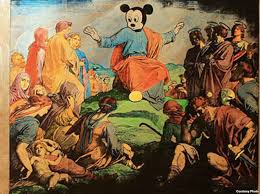
This image represents front because the Mickey Mouse character is a boundary between the two different masses of people.  Also the Mickey Mouse looks like he in the atmosphere. This connects to the vocabulary word because “Front” is a boundary between two masses of air.

________________________________________________________________________

The mentor texts are present to model for the students the quality of writing that is expected  in their blog posts. The use of Metaphors to connect to vocabulary was modeled in my classroom yesterday with the help of our wonderful, special education teacher, Mrs Hogan.

Many of my students are struggling to meet the criteria for success on this assignment. It is not that they can’t define the words, or use pictures to connect to the words, but because the students are concrete thinkers. My students struggle with the idea of a metaphor. When they want to be literal in the representation with a picture. Look at the following example for the word “Climate”

                  CLIMATE: the climate in the desert  stays the same all the time.

A picture of a desert climate to be a metaphor for climate? The picture does represent a climate but not metaphorically. I need to figure out how to engage the students at a higher level of thinking to create metaphors instead of literal representation.

As I continued to see literal representation after literal representation, I asked the class to reexamine the “mentor” texts. Ask themselves if they were following the model laid out before them. Many were upset. They acknowledge that the model was not being followed accurately. I stated that “It is okay to make a mistake, it is not okay to leave the mistake uncorrected after realizing it is a mistake.”  Student went back to work and created samples that looked more like this:

Ocean Current: The steady flow of surface ocean water in a prevailing direction.

This image of a highway is like an ocean current because the movement is continuous.

and

Atmosphere – is a mix of gases that surround the Earth. When I think of the atmosphere I think of salad, because salads are always mixed with something, weather it’s salad dressing, fruits and vegetables, etc.
Students need constant reminders of expectations. When expectations are not met teachers need to guide students back to the goal of the learning activity. Teachers need to point the students towards high quality examples of work. Allow the students to assess their own work and give them time to make the necessary changes. Students seem to rush into assignments with the desire of completion. Monitoring needs to occur to make sure learning targets are achieved.

Duck Dynasty Math, Science infused instruction!

It started this morning. Where will it end?

I awoke this morning with childcare duties on my mind. Amy, my wife was off at 8 AM to help coach our 8-year-old son Griffin and his Science Olympiad Team. My duties were to feed and entertain our 4-year old twins Gavin and Grace. Grace awoke as her mom and brother were heading out the door. After a quick breakfast she started playing independently. I headed up stairs to check on Gavin, finding him snoring away, I quickly checked my e-mail and twitter account.

On twitter I noticed the #satchat had started. I joined in a with a few comments and became engaged. As #satchat wound down, I saw a great discussion starting in #rechat. All about metaphors in education. I feel that metaphors are powerful and needed to help connect and engage students in their learning. John Spencer was leading a great conversation about the need to think carefully about metaphors used in education. Their power can be helpful and also harmful if used inappropriately. As I followed the conversation stream, Barbara Madden talked about the metaphors found in the reality show Duck Dynasty. She even shared a math problem created for her class connected to the television show.  We both shared out love for the show. Talked about writing a blog post about how we could connect student learning to the ideas presented in Duck Dynasty. I commented on how I would love to “read” a blog about these lessons.

At this point Math Minds had joined in the conversation on how great Duck Dynasty would be to connect students to their learning. Conversation moved to the creation of duck calls in the classroom. Seemed similar to the “straw” recorders built in my science classroom. To create the correct sound to call in a bird, frequency will have to be taken into account. Math and Science were coming together on Duck Dynasty. Needed to be merged together in our connected lessons. As Gavin walked into the kitchen to be served his breakfast, blog posts about lessons turned into an e-book. I was going to be an author? I, the teacher who tells his students that he is not a strong writer, is going to write a book.

Scares me a bit, but I am not doing this alone. This is going to be a great collaborative project. Three Twitter teachers are starting off with the goal of creating a math and science infused instructional book based upon a reality show. We are focusing on the areas where we have “expertise”.  If any other teachers feel so inspired by Duck Dynasty that they want to join us, welcome aboard. Contact us and share lessons you would like to see used in the classroom. Who knows where this project will lead. Who knows where this project will lead. Great Blog posts for sure, a book will ultimately be pieced together. After that who knows! Maybe even a meeting with the Duck Commander Crew!!

Stay tuned in a see where it goes. At least now I can buy Duck Dynasty DVDs and write them off on my taxes.

#MSchat 4-12-13 Cross Curricular “infusion”

Tonight’s chat focused on the need for teachers to infuse all subjects into their teaching to create a connected learning environment. Whether you teach math, science, art, gym. social studies, music or ELA student need to know that the content is connected to ideas in other domains. Skills and knowledge don’t exist in isolation. We should not teach them that way. Towards the end of the chat, teachers noted that sadly the test driven culture that exists in schools is hindering the organic learning environment of an infused classroom.

Click here to go to archive: http://storify.com/ToddBloch/mschat-4-12-13-cross-curricular-infusion