Over the past year, teachers can’t miss the hype around “Maker Spaces”. This movement is featured in trade magazines, presentations at conferences, and thousands of social media posts. Making is a trait that makes us human. Schools today need to re-embrace making as part of their curriculum.
Sadly somewhere in the 1990’s or early 2000’s school lost sight of their making traditions in search of higher test scores and in budget crunches. By the late 1970’s making was a core part of our schools. Most districts engaged students in some form of industrial arts: from Auto Mechanics to Woods Shop to Home Economics students had making options at school. As the United States lost industrial jobs to overseas, products became cheaper to buy new than replace. By the late 1990’s a testing and college ready culture perforated our school systems along with budget cuts. Making classes were the first things to go.
Being a maker is a career skill! Most companies do one of three things (if not all 3): Make a product, market a product and service a product. If we teach our students to make products their will have mastered an valuable skill. By being makers our students gain skills most textbooks do not teach. Some making skills are:
Identify a problem that needs to be addressed by a product
Work as a team member
Design a product to address the problem
Budget and gather materials to build prototype
Assemble and test prototype
Communicate results
Analyze prototype and redesign
Mass produce product
Meet Deadlines and stay in budgets
These making skills are needed in our workplaces today. Many employers look for this practical knowledge over college degrees when hiring today. Shouldn’t schools be developing practical work skills and experiences?
Our students need to be making things in every class, as often as possible. Most elementary schools encourage students as makers by doing crafts that connect to their curriculum. Art programs also seem to inspire students into making. By the time students make it to middle school most of these maker activities loose way to test preparation and core academic work. Making needs to occur in all subject areas on a regular basis.
Many teachers are discouraged about making due to the price tag that seems to come with it. Don’t be! Making can be done with cardboard collected at the local grocery store. Sure you can buy tons of cool making kits like “Little Bits” or “Tinker Create” but making has been done since the beginning of time with things found in nature. YES, we all want the cool bells, whistles and lights but making is an essential life skill that needs to be taught in schools. Make it happen on what ever budget.
As my friend Todd Beard says: “Hands on, minds on!”
Move making back into your curriculum! Our Kids Deserve it.
The alarm goes off at 6:00 AM, Amy, my wife mumbles “Why are you getting up, it is the first week summer break?” My reply as I pop out of bed: “We have things to do!” After a quick shower and a cup of coffee, because the best part of waking up is coffee, I wake my three kids. Amy is slowly dragging through her morning routine to get to work, as our 3 kids slowly trickle down stairs. Grace asks why she needed to get up. “Well Griffin has basketball camp and you and Gavin, well you are 7 so you have to come along!”
As we arrive a basketball camp, I notice attendance down from previous years. The coach already is rethinking his time slot. “Last year we had twice as many players!” An 8 AM start is seen as tall order for many, the week after school starts.
Titan Hoop Camp Photo by T Bloch
During the camp session, a few players trickled in 30 minutes to an hour late. As I looked at the sign in sheet more than 20 players who had paid failed to show up. When I asked a former student where his friends were, his quick reply was “bed!” Griffin knows that we paid for camp, He committed to going so He goes no complains. We expect he tries his best and no complains. Luckily for us he understands if he commits to something, he gives 100% even if he doesn’t like it. Next time he won’t have to sign up if he doesn’t want to go.
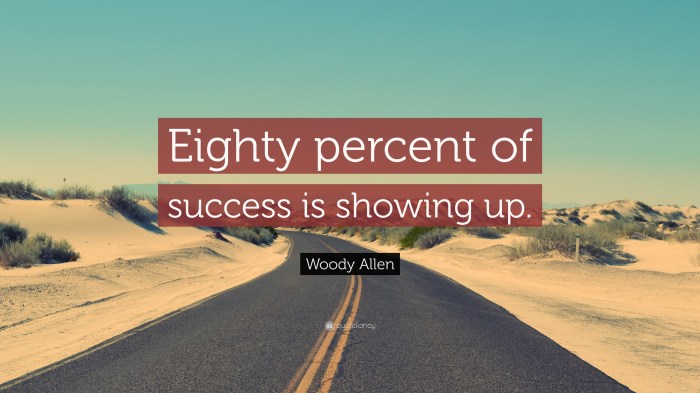
Sadly many children today see their opportunities as optional. From sports to the classroom we have children who forget that the first step to success is showing up. It takes hard work and effort to accomplish anything in the world. Many of our youth feel they don’t have to show up and success will come their way. Adults need to make sure when our children commit to any activity that they show up, try their hardest and be positive. At the end of the first day of basketball camp, the coach told the players:
“You showed up, Step 1 in making the team. You gave it your all: Step 2 at making the team. NOW maintain those efforts and you will make the TEAM.”
Great message for all! Without showing up, we fail to grow, fail to learn and fail to make the team. Encourage our children to show up! It will make all the difference.
We don’t want our children to turn into the adults who never show up!
Would you go to an non-certified doctor? Lawyer? Dentist? Probably not, those are all professionals that have a high degree of schooling. How about have an non-certified nurse or mechanic? No again. We value our health and our cars. Here is Michigan our legislators are considering allowing Non-certified teachers with HB 5384. Is this something we should be even considering? Do we value our students learning as much as our health and our cars? Teachers are professionals with a high degree of much needed education.
Not everyone is cut out to be a teacher! Legislators say they want the best and brightest teaching our youth, this bill shows that is just lip service to the voting masses. Teacher certification matters, just like licensing and certifications in all other fields. Teachers need to have skills to work in the classroom. In fact Michigan recently changed the teachers certification test making it harder for candidates to pass. Now they just want to put anyone with a pulse in front of our students? Certified teachers aren’t what created the mismanagement in Detroit which has lead to its financial problems. It has been corruption by management.
Why is having certified teachers so important? Teaching is an art that requires certain skills. Without these skills teachers will fail and quickly leave the classroom, creating a steady flow of teachers out of the classroom. Teachers need to be masters of content while also understand how to manage a classroom. The teaching channel presents a great list of 8 essential skills for new teachers. These skills are keys to ALL teacher certification programs .
Certified teachers know:
How to teach
What to teach.
How to differentiate.
How to motivate.
How to integrate technology.
How to address every students needs.
How to manage a classroom.
How to connect to parents and community.
That relationships are key to success.
That flexibility and adaptability are needed.
Their students are more than a test score.
It takes training to learn these skills. Even our most skill profession, medicine, makes error. Currently the 3rd leading cause of death in the US is medical error! Does this mean we should start allowing non-certified people practice medicine? NO, time to fine tune training to help reduce errors.
It is time to TELL Lansing to stop devaluing the education profession and OUR KIDS EDUCATION. We need certified teachers in EVERY classroom. HB 5384 is a step backwards in time. It is not good for our students, our schools or our communities! Don’t we value today’s youth enough to know this is a bad move!
It resonated with me. I have made myself consumed by busy ever since I started teaching. I justified it as advancing my career and becoming a better teacher. I participated on countless committees, became department chair, and ended up Union President. Busy and I were constant friends. What was the cost? Was it worth it?
Reflecting on education busy is a precise word to describe our current system. Students are busy being forced to learn at a prescribe rate and order. Homework and assessments are doled out to monitor successes and failures of busy. I look at all the “busy” worksheets by 7 year olds bring home from their 1st grade classroom, keeping them busy in the name of practice and learning. My 6th grader struggles balancing his 6 class schedule. Busy is his friend at school. He has to quickly shift gears from Language Arts, Math, Science, Social Studies, Band and a rotating specials class. When he comes home he often forgets most of the learning that occurred. Are our students too busy to learn? After reading a few Shadow a Student Challenge blog post, most observers would say yes.
Our students are also busy at home participating in extracurricular activities. Having 3 kids, our family has after school activities 4 nights a week, ranging from dance to scouts to sports practice. Many of my students have similar busy lives. Some work, play sports, volunteer their time or have a hobby. What is the affects of all of this busy on our students?
Maybe the next generation has it figured out. Millennials desire a work life balance more than any generation before. They need instant gratification and recognition for their efforts. My students resist work if the purpose is not clearly shown. Students often don’t see the balance between school and their life or the gratification from their school efforts. Is this busy culture in schools harming them?
Lets move schools away from busy towards mindful purposeful learning!
Walking into the classroom, a paper airplane flies from the back row towards the front. Upon asking the student to pick it up, I get the normal teenage response: I didn’t throw it. Although I know this is the typical middle school student response, outright denial of any wrong doing, it angers me. After 15 years of teaching in a middle school, I should be used to it. Where do adolescents learn this behavior?
Then it dawned on me. Students see adults out right lie about their behavior every day. Lies permeate our lives. Observant children learn to lie about their behavior by following the adult models found all around them. Our youth look to model themselves after celebrities/characters they observe on TV and social media. Poor behavior is also abundant in many of the popular video games our children are playing. Adults are behaving poor all over the world for our students to see.
Children here in Michigan can look no further than Lansing to see the denial behavior. Flint residents have been complaining for over a year about their water. Finally Governor Snyder has admitted their is a problem. If our leaders are modeling this behavior, how can we fix it in our schools?
Where can our students find positive role models? TV used to be full of them. Ranging from The Huxtables on the Cosby show to The Keatons on Family Ties. Of course preschool students see positive behaviors on Sesame Street and other PBS programing. Most mainstream programing lacks programing that contains positive role models. Now in a world of on-demand and 100’s of channels our youth can see shows that were once only seen after 10 pm, any time they desire.
Adults need to reflect on our values. DO we value adults behaving poorly? Is this the legacy we want to pass on to the next generation? Our children’s behavior is all learning, the majority of it by observing adults. Be the model you want others to follow! Time for the adults to shape up!
Guest Post from Doug Hill – Rochester Education Association President
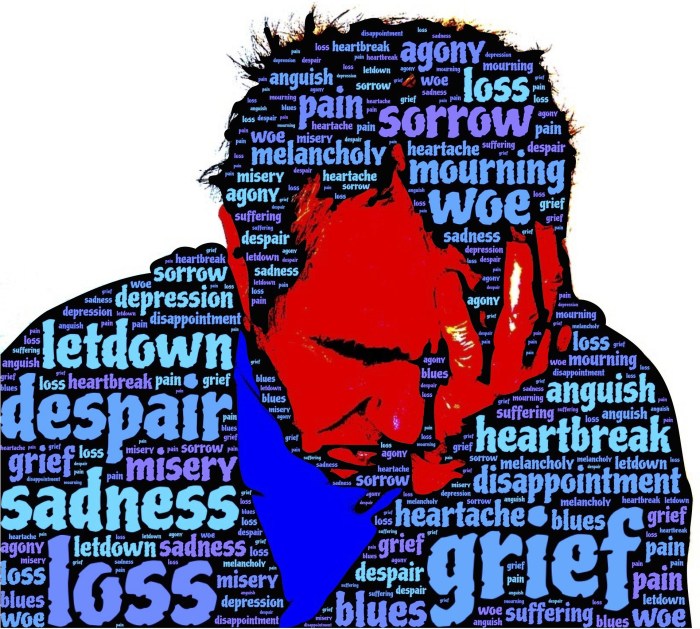
Is it anger? Is it despair? Is it disgust? Is it hopelessness?
I’ll be quite honest, I’m not sure what I’ve been feeling these past few weeks as a pair of crises have blown up within an hour’s drive of us.
To our north we have the Flint water fiasco that first rose to national prominence back in December when MSNBC’sRachel Maddow provided this compelling 18-minute profile. To our south we have what can only be described as education in squalor-like conditions in many of the Detroit Public Schools’ buildings. Our brother and sister educators in DPS have been staging random “sick outs” the past several weeks in an effort to draw attention to these conditions which include: roof and window leaks, low/no heat, overcrowded classrooms, mold, and vermin.
There are some common threads woven between these two tragedies. One is Gov. Rick Snyder; another is the Emergency Manager (EM) legislation he signed into law during the infancy of his first term; yet another is the current DPS Emergency Manager, Darnell Early, who was also an EM in Flint at the time the city permanently severed ties with the Detroit Water and Sewerage Department by selling the pipeline to Lake Huron; still another is a sense of what can best be classified as a general inaction or sense of urgency – or even misguided actions – on the part of our elected leaders in Lansing; and the final common thread is us (yes, you and I).
Let’s begin with the Gov. Snyder, for if there’s one thing we know it’s that, ultimately, these two crises have occurred during his time leading the state.
The EM Law, then-known as Public Act 4 of 2011 was signed by Gov. Snyder and put into action the day before St. Patrick’s Day 2011 and its preamble states the following:
“AN ACT to safeguard and assure the fiscal accountability of units of local government, including school districts; to preserve the capacity of units of local government to provide or cause to be provided necessary services essential to the public health, safety, and welfare; …”
I purposefully clipped the preamble at this point because I believe it may be the most compelling and important segment of the entire law (which you can read fully here): Provide the necessary services essential to the public health, safety, and welfare pretty much says it all, right? Can anyone say without hesitation that – either knowingly or unknowingly – poisoning a city’s water supply or allowing school buildings to deteriorate to such an extent is in line with maintaining the public health, safety, or welfare?
Yet both have happened. Flint is currently on its fifth EM since December 2011; DPS is on its third since March 2009 (appointed as an Emergency Financial Manager under then-Gov. Jennifer Granholm). The EM has the authority to circumvent democratically elected officials (mayor, supervisors, school boards, etc.) to make the necessary decisions to maintain the public health, safety, and welfare. These authorities include voiding contracts and the like. (Please note: I don’t approve of EM and was adamantly opposed – and remain so – to this law when created.) He/she is appointed by the state’s governor.
Admittedly, these Detroit schools did not suddenly become decrepit and unfit for human habitation overnight. It has been a slow decline with plenty of waste, missteps, and malfeasance through the years long before 2010 when Snyder took office. But the current dilemma is due in no small part to legislation signed by Gov. Snyder that allowed charter schools to multiply like jackrabbits in and around the city, his encouragement of cyber schools and schools of choice, and, perhaps the coup de grâce, the creation of the Educational Achievement Authority (EAA) four years ago (announcement video here).
The EAA ostensibly allows the State Superintendent or an EM to transfer low-performing schools (bottom 5% in state) into the EAA. The idea was that the EAA would serve as an incubator for improving the education system in Detroit and presumably in other areas later on. Presently there are 15 Detroit schools in the EAA (nine elementary) and this year just one fourth grader was deemed proficient in the M-STEP math test (Eclectablog post here).
What all of these Gov. Snyder-approved “reforms” were designed to do was develop competition through choice for Detroit parents and – because everyone loves good competition – things would improve for Detroit’s students. Sadly, what has in fact happened, is Detroit parents followed the siren song of charters, cyber schools, neighboring school districts, and the EAA and enrolled their children outside of DPS. This steep and steady decline of students has only further exacerbated budget challenges with DPS and created many of the issues our colleagues are voicing their displeasure about.
Finally, it would seem, action may be underway. Detroit Mayor Mike Duggan toured buildings Tuesday (see storyhere) and has issued a mandate that all be inspected (see story here). Of course there is also misguided action. At least two bills are expected to be introduced in the state Senate Thursday regarding DPS; presumably one of them will be to address the budget crisis but another – and the one seemed to generate more outrage by Senate Education Committee Chair Phil Pavlov (R-St. Clair) – might be a bill to outlaw sick outs (see story here).
Meanwhile, in Flint the hits just keep coming. Today state health reports indicate a steep increase in reported cases of Legionnaires in Genesee County which seems to correlate with the shift to Flint River water in the city (see story here). Likewise, Snyder authorized the use of the National Guard to assist in the distribution of water filters, water, and water test kits (see story here) and has finally reached out the Federal Emergency Management Agency (FEMA) for federal assistance.
It sickens me that this has happened and I believe in addition to our state’s elected leadership we are all – to some extent – complicit in these occurrences.
As I’d indicated last week my resolution this year is to read more and the book I’ve begun with has been Peter Block’s 2008 work: Community: The Structure of Belonging.
In it, he outlines the steps one (or a small group) needs to take to – quite literally – build a true community. What I’ve realized more than halfway through this thought-provoking read is that even in a place like Rochester/Rochester Hills we DO NOT have a community in the purest sense of the term.
Block devotes a chapter to what he calls “The Stuck Community.” Despite having written this in 2008, I believe we are still very much in this stuck community and the Flint and Detroit situations evidence this. To wit:
“…The story of the stuck community can be heard both in the dominant public debate and also in what we talk to each other about each day. … The overriding characteristic of the stuck community is the decision to broadcast all the reasons we have to be afraid. This is a kind of advertising that exploits the fear we have of violence, of the urban core, of terrorism, of African-Americans and other ethnic groups, of immigrants, of those who are poor or uneducated, of other religions, and of other countries. It seems like the lead story of every local evening newscast is about crime and human suffering, and if our city had none that day, then we hear how somewhere else in the world someone was murdered, bombed, killed in an accident, or abducted from what was once thought to be a safe place. What we are hearing is the marketing of fear. … The marketing of fear is not just for profit; it also holds a political agenda. … It gets packaged as spiritual values, family values, the American way, love it or leave it, all under the umbrella of law and order.
“In addition to marketing fear, the stuck community markets fault. … Fault marketing rests on the belief that if we can assign blame and find cause, it is useful to society and somehow reassures us that it won’t happen again.”
Sadly, there is far too much fault marketing going on today. You need look no further than the ongoing presidential campaign for a healthy dose, but you can also look to the challenges facing us closer to home in Detroit and Flint. Some blame the Governor, some blame the Emergency Manager(s), some blame the state legislators, some blame the teachers, and some blame the Michigan Department of Environmental Quality. What no one seems willing to do, however, is be accountable.
Which is really one of the main tenets of Community. In a true community everyone is accountable because everyoneis a leader because everyone has a sense of ownership.
In a later chapter, “Taking Back Our Projections,” Block writes:
“One payoff for believing that problems and the suffering in our cities are the inevitable products of modern life and culture is that it lets us off the hook. The payoff begins the moment we believe that problems reside in others and that they are the ones who need to change. We displace or assign to others certain qualities that have more to do with us than with them. This is called projection. … The essence of projection is that it placed accountability for an alternative future on others. This is the payoff of stereotyping, prejudice, and a bunch of “isms” that we are familiar with. … The reward is that it takes the pressure off of us. It is a welcome escape from our freedom. We project onto leaders the qualities or disappointments that we find too much to carry ourselves. We project onto the strangers, the wounded, the enemy those aspects of ourselves that are too much to own.”
Block goes on to provide a powerfully tangible (in my opinion) example:
“Take poverty, for example. When we see low-income people, we focus on their needs and deficiencies, and that is all we see. We think their poverty is central to who they are, and that is all they are. We believe that the poor have created that problem for themselves. We view them with charity or pity and wring our hands of their plight. At this moment we are projecting our own vulnerability on the poor. It is a defense against not only my own vulnerability, but also my own complicity in creating poverty. If we took back this projection, we would stop denying that each of us plays a role in creating poverty – by our way of living, by our indifference, by our labeling them as ‘poor’ as if that is who they are, by our choice not to have them as neighbors and get to know them. Part of the reduce taxes debate is the belief that we are wasting money on ‘those people.’ … When we believe that the ‘other’ is the problem and that transformation is required of them and not of us, we become the beneficiaries of their suffering in the world. … The mindset that the ‘other’ is the problem means that we need to wait for them to change before the change we want can come to pass. And until they change, we need to stay distant and contain them. This diverts us from the realization that we have the means, the tools, the thinking to create a world we want to inhabit, and to do it for all.”
Yes! We do have the means, the tools, and the thinking to create a world we all want to inhabit. Perhaps what has resonated most about Block’s work has been his insistence that to truly develop a community one must form relationships with people/groups unlike you/yours. In short, we need to have conversations and share our stories and experiences with those outside our usual circles.
I wonder if it was Ann Arbor using the Huron River for its water supply and lead leeched into the pipes if Gov. Snyder may have taken a keener interest sooner? Likewise, if there was a rat infestation and black mold issues at St. Clair High School, might Sen. Pavlov be more forgiving to the educators who were “sick” or even be more willing to find a solution to its financial problems? I wonder (rhetorically) what kind of relationship Gov. Snyder and Sen. Pavlov have with the residents of Flint and the teachers in DPS, respectively?
I’ve extolled the virtues of relationships and sharing our story in this space plenty over the past 16 months. As I continue to read Community I am convinced more than ever that it is paramount for us to have these sometimes uncomfortable conversations and share more about ourselves, who we are, why we do what we do, and the challenges we face with those who scoff at teachers (parents, politicians, FB friend Peter, etc.).
Likewise, Block notes that we as a western culture are isolated because of our individualistic narrative, the inward attention of our institutions and our professions, and the message from the media all fragment us (remember “fault marketing?”). He continues that most sectors of our society are working diligently, though in isolation: “Each piece is working hard on its own purpose, but parallel effort added together does not make a community. Our communities are separated into silos.”
I would say this definition is true of Rochester Schools: Teachers, support staff, building administrators, district administrators, and the board of education; all working hard and trying to do the best job possible.
The question then, is how do we tear down those silos and once again become Rochester Community Schools?




 Sweat to Inspire