The Ultimate gift for Teacher Appreciation Week!

teacher-appreciation-week-2016

Give teachers the ultimate gift this year: YOUR RESPECT.

Teacher Appreciation week is upon us. As a teacher it is a great week to feel good about teaching students. Businesses offer special deals to teachers. Parent Teacher Organizations often garnish teachers with gifts and sweet treats. Students bring in cards of thanks. Districts issue thank you statements and hold celebrations to thank their teachers. Teachers are celebrated for all the great things they do for 5 wonderful day. Then we move on to Mother’s Day and with the rest of the year. Teachers fall to the back of the community’s mind, until the next year. There are times, unfortunately when teachers move to the forefront of the news. Events like Newtown, CT or Columbine tell the story of the heroic teachers’ mindset in the time of tragedy.

Teacher Appreciation week is a nice gesture to a craft that society tends to blame for its ills. Every time a sad tale of bullying, drugs, alcohol, suicide or vandalism by youth, the education system is quickly blamed. Advocates quickly propose legislation to “remedy” the problem. New unfunded mandates are placed upon our schools teachers. When studies find students aren’t eating healthy foods or getting enough exercise. Bills are introduced to change how schools serve lunch and offer recess. Schools are given the task to fix every problem that come up in the ever changing world. Not only are teachers required to address instruction of intellectual knowledge but we are charged with molding students socially, emotionally and physically. Teachers are doing their best to prepare to be proper citizens in our ever changing world. Often if feels like a thankless task.  Instead of having an appreciation week, show them your RESPECT all year.

How you ask:

1. Spend time with your children and teach them how to respect their teachers. It needs to be modeled at home. Don’t undermine the educational process.

2. Model proper use of technology. Don’t call and text your student’s cell phone when they are in class.

3. Support the school, attend school functions. Volunteer, help where ever and when ever you can.

4. Give financial support to your districts educational foundation. These foundations support innovative ideas in the classrooms, funding teachers projects. Every dollar ends up back in the classrooms supporting students. Teachers already spend more the $500 a year of their own money in the classroom for students, help out if you can.

5. Vote for candidates and proposals that support education and fund your schools. Many schools have aging infrastructures and need new funding to keep the buildings updated and stay current with technology demands.

6. Work with the teachers for your child’s education. Remember to be a part of an educational team with teachers and support the classroom activities. The demands are high but with parental support and good teachers every child can succeed.

7. When success is achieved, go back, let your teachers know and thank them. Nothing, and I mean nothing makes a teacher feel awesome about what they do than when they hear ultimate success stories.

Enjoy teacher appreciation week next week. I hope you celebrate it by showing all educators RESPECT.

Old becomes New at Bookstock 2014: Used Media and Book Sale

I was selected for this sponsored post by Hay There Social Media.  All opinions expressed are my own.

As a classroom teacher and parent, I am always looking for new editions to my media collection. Reading is essential for the development of anyone as a life long learner. New books bring new adventures, tails and discoveries into our lives. I became engaged in being a reader at a very young age by my parents. I remember having my mother and grandmother read to be before I could conquer the words. As I got older my parents dedicated “quiet” time each evening for 30 minutes for everyone to read. The Children’s Reading Association recommends that every child be read to or read for 20 minutes a day.  As I have grown to have children of my own, I do everything possible to pass the love and ritual of reading to my three children.

For me it has been hard to keep up with the cost of keeping a current collection of books for my students and children. My children always want new an exciting books to read. My students demand a variety of materials for them to use in class. Libraries are great to borrow books for a short while and try out in class. My children love to visit the library, but hate when it come time to return their new favorite title. Garage sales offer a few choices when looking for a less expensive alternative, but often leave me finding few treasures while expending way to much time looking. Here in Michigan we have an event that helps make others old books and media, become NEW for those that will use them, Bookstock. Not only is it a great way to find books and media to use, it serves as a fundraiser to help promote reading for all.

Bookstock Sale

So just what is Bookstock?

WHAT IS BOOKSTOCK?

Bookstock is an annual, non-profit used book and media sale. It is a highly visible event with thousands of shoppers.  All merchandise sold comes from donations and all workers and organizers are volunteers.  Proceeds from the sale, after deducting expenses, are donated to non-profit organizations. Merchandise remaining after the sale is donated to area non-profit organizations and schools.

WHEN AND WHERE DOES BOOKSTOCK TAKE PLACE?

Bookstock takes place April 27-May 4, 2014 at Laurel Park Place in Livonia, Michigan.

On Sunday, April 27, 8:15 a.m.-11:00 a.m., there is a Pre-Sale for which there is a $20 entrance fee.  After that, admission is free.

Hours are 10:00 a.m.-9:00 p.m. Monday through Saturday and 11:00 a.m.-6:00 p.m. on both Sundays.

Found on the web at http://www.bookstock.info/index.html

WHO COMPRISES BOOKSTOCK AND HOW DID IT BEGIN?

Bookstock is a project of the Detroit Jewish Community Relations Council (JCRC).  Because more than 600 volunteers are needed annually, a coalition of twelve organizations, including JCRC, work together to produce Bookstock. Each member organization of the Bookstock coalition maintains its own 501(c)(3) non-profit status and supports literacy and education in Detroit and the metropolitan area.

Bookstock is a reincarnation of the Brandeis University National Women’s Committee, Detroit Chapter, Used Book Sales that were held in Detroit and Southfield annually over a forty-year period.

WHAT BENEFITS DOES BOOKSTOCK GENERATE?

Bookstock benefits the entire community by recycling gently used books and media and then offering them for sale at value prices.  Most books and media range in price from $1-$4, although there are “special selections” (more valuable books) at various price points.

In 12 years, Bookstock has donated just shy of $1,000,000 to non-profit organizations in Detroit and the metro area, including those comprising its coalition.  Additionally, Bookstock donates large quantities of unsold books to other non-profit organizations and schools.  For example, the Salvation Army receives the bulk of the remaining books and media.  Bookstock also underwrites a scholarship at the Wayne State University School of Library Science and supports the Bookstock Fund, a literacy fund that provides micro-grants to enhance literacy and learning in Detroit and the metro area.

WHAT ADDITIONAL SPECIAL EVENTS DOES BOOKSTOCK OFFER?

  • Bookstock’s Monday Madness, Monday, April 28, all day:  Each purchaser receives an envelope with varying prizes.  Prizes are randomly varied in each envelope but a single envelope could include gift cards, coupons and/or a giveaway.
  • Teacher Appreciation Night, Tuesday, April 29, 3:00 a.m.-9:00 p.m.: Teachers with valid i.d.’s receive a 50% discount.
  • Bookstock B.E.S.T. Award, Tuesday, April 29, 5:00 p.m.:  The B.E.S.T. Award is given to the winners of a contest open to fourth grade students in the Detroit Public Schools based on submission of a one page essay about their favorite books. Five students, their teachers, and their schools all receive monetary awards.
  • Booksbuster Sale, Wednesday, April 30 and Thursday, May 1, 3:00 p.m.-9:00 p.m.: For every three items purchased, a fourth one may be gotten for free (it must be the least expensive of the four chosen).
  • Half-Price Sale, Sunday, May 4, all day:  All books and media are half price.
  • Check out their Facebook page 

Hope you have the time to add to your collection and make the old become new again!

Sitting on a park bench …

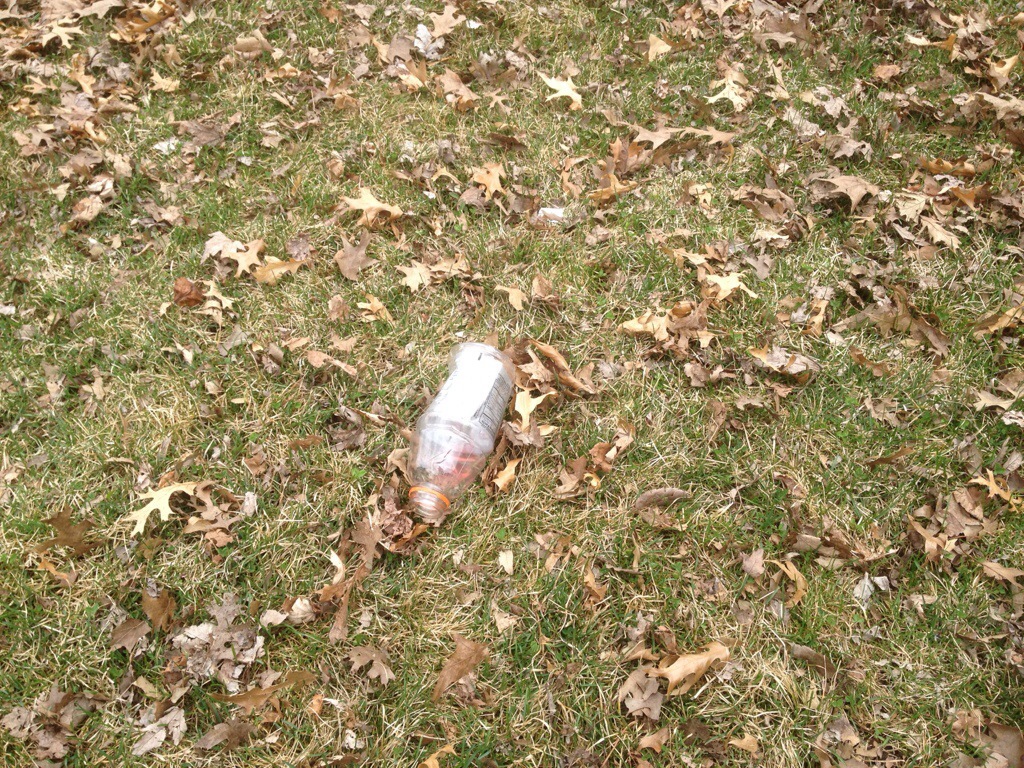
Spring, has begun to show her face here in Michigan, after a prolonged visit from old man winter. The snow has melted off the ball fields and the park paths are finally drying out.  Today, I took my five year old twins to t-ball practice in a near by park. As I sat on the park bench watching my children learn and quickly forget the finer points of fielding and hitting. I noticed that I was sitting surrounded by garbage. As my eyes surveyed the area where the adults were seated. Waste lay all around where we were sitting.  It seemed that garbage was all over the park, especially along the paths.

20140413-202135.jpg

Since I was just sitting watching my children at practice, I figured, WHY not help clean up the park? I started picking up trash. Carrying handfuls to the can nearby. As I deposited my first load, I noticed that the density of deposited trash has higher the closer to the can. Must have been plenty of near misses. As I picked up the random pieces of trash. A few parents gave me odd looks. A guy on the basketball court near by thanked me for throwing away his empty water bottle he left beside the path. I was hoping to lead some of the sedentary parents into an impromptu cleaning crew. Similarly to how this guy becomes a dance leader:

No such luck. Just a few odd looks. I forced my older son to help out, but no second follower was to be found. It made me sad. Park users gave looks as if it wasn’t their job to keep it clean.

This is similar to education. People see the needs of our students, but say, “Not my JOB!!” , or “IT is the schools’ and teachers’ job to education our students!” Educating the youth of the world is similar to taking care of the planet. THOSE that encounter opportunities to make a difference MUST tke action and make a difference. We can’t expect others to complete the job. They might not see the need. They might be too overwhelmed with other tasks to take care of the needs we see.

Similar attitudes exist all over society. I see it in my students when I ask them to help clean up. “I didn’t make the mess,” is quickly uttered out of their mouths. “I didn’t say you did, I just need your help cleaning,” is my reply. Society needs to work together and solve problems, not rely on someones title and job description to do so. When action is needed, Action MUST happen.

IF anything should be required curriculum in our schools, positive action of helping others has to top the list. So if you encounter me (or another) out doing good by clean up a park or helping others please be a second follower.

Is hitting a ball harder than educating a student?

This time of year has me thinking about baseball! The weather is slowly warming, plans begin to grow, and opening day is upon us in the Major Leagues. I have many fond memories of baseball growing up, playing with friends in open fields. Never fielding a full team but just the pleasure of pitching, hitting and throwing. Growing up my father put more emphasis on individual sports, “You want to play a sport that you can do by yourself” he would often share. Reminding us that we never had 18 kids to play a “proper” game in the neighbors yard. As I grew up, I did focus on other sports enjoying basketball, tennis and golf because playing them did not require a full squad of players. My father also place a greater value on knowledge than physical sports skills. Should I have spent more time learning to swing a bat?

This week Miguel Cabrera signed a record deal to play baseball, $292 million dollars for the next ten years. I am happy for him. He is probably the best baseball player of our time and in the discussion as being one of the best of all time. Miguel Cabrera is going to make roughly $50,000 per at bat for the next ten years with the Tigers. (If he averages 600 at bats per year.) That is about the average yearly salary for teachers in Michigan! WOW!! Over the course of this 10 year contract he will make enough to pay for 6000 teachers for a year. Well he is the best player in baseball right now, right!

Cabrera has a .321 career batting average, which is great for baseball (50th all time). This means he makes an out .679 of the time he makes an out! If a teacher in the classroom had .321 success average and .679 failure average, most school districts would find them ineffective. Yet in baseball this is one of the best ALL time? Is hitting a ball harder than educating a student? Education and teaching is undervalued in today’s society. Fans flock to “average” teams. Every school child aspires to be a professional  athlete at some point growing up. How can we make this happen for education and teaching?

If the current trends in education continue, our best students will not want to be educators.

The vote in Grosse Pointe tells a bigger story

It was election day here in Metro-Detroit yesterday. Well, for a few communities, mainly voting on school bonds. The most notable bond issue was in Grosse Pointe, an affluent community that borders Detroit along the river. Grosse Pointe Public School proposed a $50.2 million dollar bond issue, to upgrade their outdated tech infrastructure, upgrade security systems and create an one to one technology device program. The community overwhelmingly voted the proposal down. (Detroit Free Press article)  There is more to this story than disappointed teachers and bond committee members. It speaks volumes about American Society.

The Grosse Pointe story shows educators that schools aren’t supported. GP has historically been a community for the privileged who hold education in high regard. The schools are points of pride for the community. The district and supports crafted a plan, held informational meetings and gained vocal support. The community responded by voting down the proposal. When I talked to a few teacher co-workers who live in the community they were upset and frustrated. Mainly at their business minded spouses, who joined the majority in voting down the issue. “We went out to Valentine’s dinner and it cost $275, for one night out! The bond would have cost use about $550 a year but would have been so much better than a night out!” Responded one upset co-worker.  Sums it up for me: Our society is more concerned with their personal entertainment that education. Two nights out on the town are more valued than a year’s worth of education! Truly a sad sign of the times, that needs to be fixed.

Lessons learned from coaching basketball…

For the past 3 years I have been coaching my son’s youth basketball team. I started when he was in 2nd grade, it has been fun to watch the kids mature and develop skills. The league is run through our school district. Records are not kept and the high school players serve as referees. At the beginning of each season the head high school coach gathers all the volunteer coaches to emphasize sportsmanship for the league. He also explains that our referees are learning their jobs and only high school students. Reminding us that mistakes will happen, but not to act like it is the Pros.

I try to teach my team to focus on improving their game. Shooting, rebounding, dribbling, and passing are skills the young developing players need. During games, I ask my players to not complain about the whistles, but listen to the referees to help improve their games. I sit on the bench, only yelling out directions when the team needs assistance. “Get back” is my most used call, for after the other team pulls down a defensive rebound. Otherwise my players would press and try to steal the ball back (not allowed until next year). Other calls will be for players to set picks or for motion. I make a point to assist the young referees with calls that they might not see, by pointing in the the direction the ball should go for out of bounds. After the game I thank the high school players for help my young athletes learn. I feel I am modeling positive sportsmanship for our next generation of athletes.

After two games this year, I have been disturbed by the other coaches shouting out complains focused at the officiating. In our first game, the you referees allowed some moderate physical contact. I noticed it at both ends of the court which mean the referees were consistent. My players adjusted. The other coach yelled out complaints against our teams contact. Since, I noticed it. I took it upon myself to talk to the young high school players at a break in the action. Sharing that the physical contact is a bit much for both sides and might lead to a problem. The other coach rushed over yelling that I have nothing to complain about and my players need to have fouls called. His temperament cause the assistance high school coach to observe the rest of the game in concern.

During today’s game, the opposing coach started to notice that a few players were carrying the ball on the dribble. This often happens with 4th graders learning the game. The student  referees, again were not calling it consistently both ways. The coach you yell every time a call was’t made on us, failing to notice all the no calls his players were receiving. I felt the referees were trying to let all players learn and tried to be consistent with all of their calls.

Should youth coaches dispute calls? I feel this is a touch subject. My players point out all the missed traveling calls on the other team today. I have told them never to dispute a call with a referee. Players need to learn the referees are in charge of the game. We might not agree with them, but their calls are final. My players know that I am the only on to talk to a referee about the game. Youth coaches need to realize we are modeling behaviors for the athletes we coach. Pro and College ranks do not model well for the athletes of tomorrow. Youth sports programs need to lead the way! In youth sports winning and loosing does not matter, sportsmanship does!

Remember we are always modeling for the next generation!! If you have a real issue then discuss it with the organizers in private, not in front of your young impressionable team!