The needed struggle with change in education

Education is changing at a rapid pace. Over the last two years, my school district has made more changes than the previous 12 that I worked there. Schools are dealing with so many changes teachers heads are spinning.

  • Curriculum changes,
  • Legislative changes
  • Testing changes
  • Evaluation changes
  • Instructional methods changes
  • Technology Changes
  • and of course students changes

Many arguments say it is about time the outdated American educational system made some changes. Educators are trained to ask question, to seek information and find out the reasons changes are made. Highly Effective educators seek research data that supports a change in their instructional practice. ALL schools require data to support changes to be presented as part of school improvement plans.

Currently teachers feel enormous changes come from outside of the school district, based upon legislative agendas. The majority of this “legislative” change has little research and data supporting it. Teachers and Schools lobby to get more data and research but few are listening. Teachers feel threatened by these changes that they had little voice in making. Feeling defeated teachers start to put up walls, not wanting to listen to any ideas about change.

Education at the same time, is attempting to evolve into a better machine for the 21st century and beyond. Blended learning models, flipped classrooms, standards based grading and many other student centered changes are happening. Sadly,some teachers overwhelmed with change, resist the changes that they can. Teachers need to look at these changes carefully. DO they make learning improve in my classroom? Will they help my students become engaged and take ownership of their learning? IS it something my students need? (Are my students performing WELL now?) Are the results there or is it change for change sake?

Educators need to look at change in 3 ways:

1. Change you can’t control- Legislative change we can not do anything about once laws are passed. Sadly many legislators don’t listen to our voice on these issues. We can dwell on this change, just deal and move on. (Knowing we voiced our opinion when we could)

2. Changes where our students benefit-Research shows that my students will benefit. This is a change I have to make and invest time to make it happen in my classroom. This might mean I have to replace a current technique or instructional plan. This change might be hard work, but most things worth doing are hard work.

3. Change for change sake- IF a change shows no value to our students, it should not be made! Teachers have to be careful with all the educational jargon and “sales” pitches on new “programs”. It is always best to talk to teachers who are using the tool to hear first hand how it works and if it improves students’ learning. Remember that what works in one place, doesn’t always work in another. Look for data that shows repeated successes.


Change is an essential element in education. Without change, students would still be writing on chalkboards, watching film strips, and in one room school houses. Struggling with change, is natural. Educators must question changes to make sure it is what is best for their students.

We must remember not to fight the NEEDED change because we can, since we can’t fight the BAD legislative laws that change how schools operate. We have to remember to separate the political fights from our students’ classroom needs.

 Below is a link to an #mschat on Educational Change.


#MSchat 3-20-14 Engaging students with movement

We had a great chat tonight about how movement is necessary to help engage students. Who can sit for an entire class period? I can’t sit still for 15 minutes. Kim Campbell wrote a great article for AMLE  that the chat was based on. The day of a quiet classroom and students sitting neatly in rows is over! Schools need to plan for student movement if they are going to be successful. Below is the archive for the chat.

Coding, Just do IT!!

When I first started hearing about coding on Twitter, I was intrigued. I remember when I was in school learning how to use Basic programming. “If this then that… ” and Go to Line XX” statements bring back frustrating memories of the green screens. I at first figured I needed to take a class to figure out how to program myself, then learn to teach it, then bring it into my middle school classroom. After hearing a few elementary teachers talk about coding clubs and coding in their classrooms, I figured I needed to get up to speed with coding so my students could experience it.  As I was checking out coding sites, I noticed that Code.org celebrated an anniversary and placed a version of the “flappy bird” came on their site. At the same time my 4th hour ten week “Maker” class was begging to try something new.

So, I took the plunge.  I worked through the code.org activities at night, teaching them the next day. My students were instantly engaged. Eager to make their own games. Being a group of diverse learners, some were done in minutes, while others took all class period. All ended up making a game. The learning that was happening in the classroom was astounding. Students were asking each other meaningful questions, trying different lines of code, failing and then fixing the fail. They were proud to share their games with classmates.

IMG_2915[1]

Every seventh grade advisory class heard about our “games”. Students who took the class earlier in the year  complained that they did not get to code. We continued through the lessons on code.org until the students wanted freedom to make something on their own instead of using prescribed codes. We have since moved on to Scratch, which allows the students more freedom to create animated scenes and games. I am barely ahead of the students, often having to model problem solving skills on the fly to help them find success. We are learning to code as a class. The class has experts who even I go to with questions, because they go home and “play” with code to produce their desired results. A few students aren’t as engaged but they still are learning how to figure out code.


If you haven’t tried coding with your students, you should do it! I saw learning in the rawest form. We were learning as a class. Everyone wanted to complete the task. I now have students who are not enrolled in the class but e-mailing in the assignments to show what they have learned by following the class tasks list. Coding has lead to more engagement in authentic learning for my students. They are coming to class wanting to see what they can learn each and every day.

Reflections on 3 days of learning at #AMLE2013

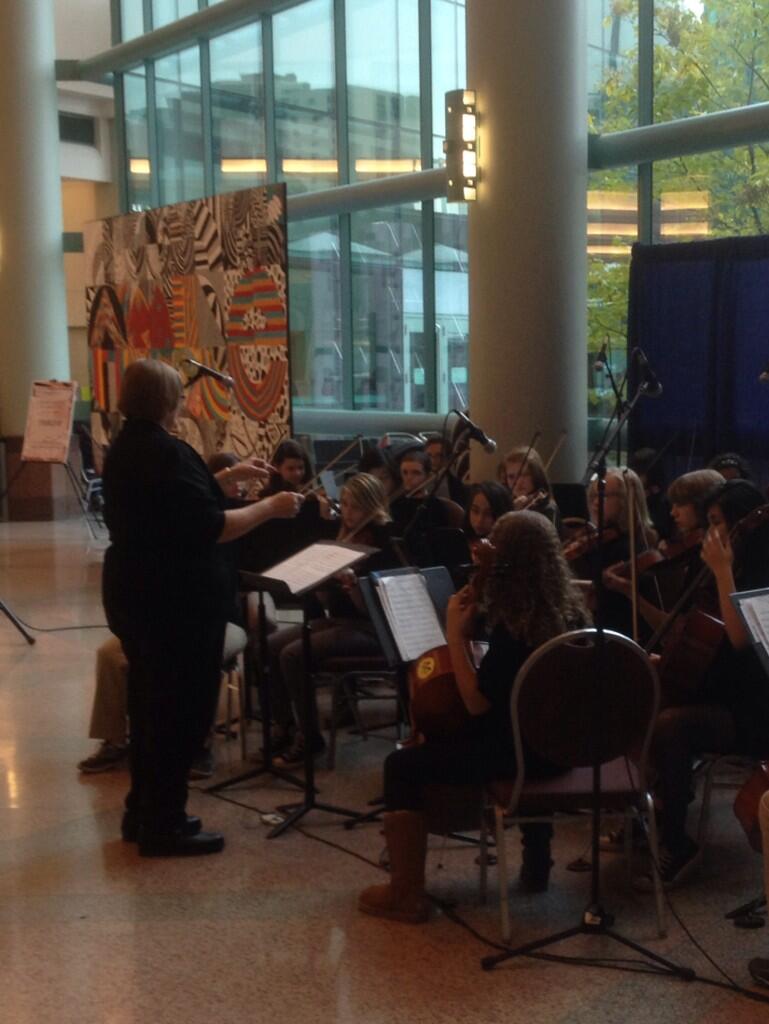
Students performing at #AMLE2013 

I had the pleasure of attending The Association of Middle Level Education Conference in Minneapolis, MN this past week. It was my first time attending a “national” level conference. The conference had an incredible feel of energy an passion. Walking into the convention hall I should have know the energy would be high since the line for the only coffee stand around went out of sight. All the attendees had to get their share of caffeine to match the energy of the conference and its presenters.

The session program was littered with who is who of educational Authors/ experts: Ruth Culham, Laura Robb, Jeff Wilhelm, Ruby Payne, Rick Stiggins, Jack Berckemeyer, Monte Selby, Kim Campbell and Rick Wormeli to name a few. As an attendee it was hard for me to choose what sessions to attend, not only high caliber sessions from authors, but 100’s of sessions from teachers about what works in their classrooms. Every session I walked into demonstrated a passion for teaching every student that walks into a middle school classroom. What ever topic you needed to fulfill  your professional development needs you could find it.

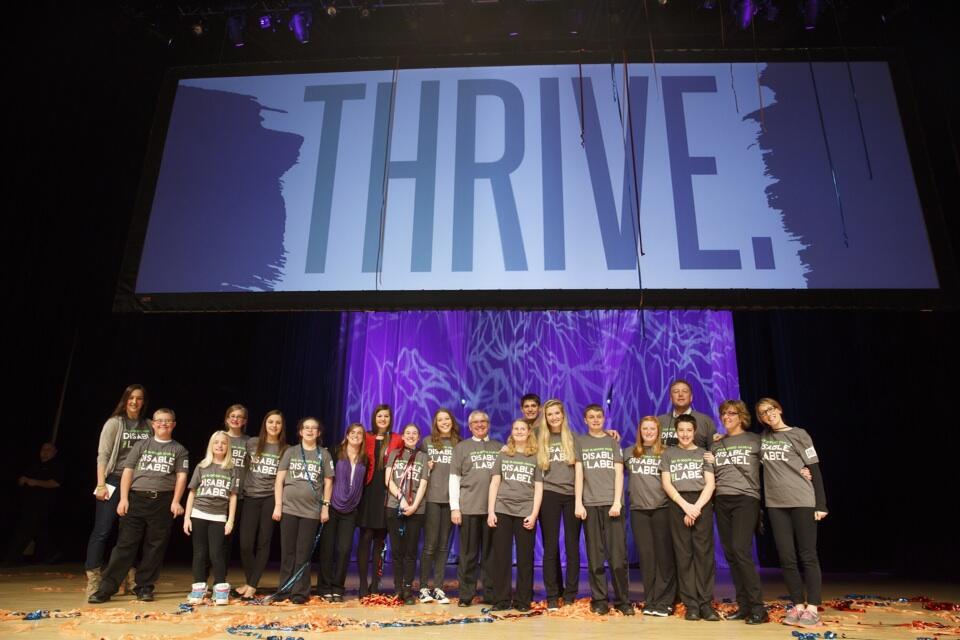
The General Session on Thursday remarkable. The Special Olympics, Project Unify put on a stage show demonstrating the needs to spread the word to end the word. If you every get a chance to see their performances DO!! Inspiring and meaningful. Every middle school student should be exposed to this program. Danielle Liebl and Jamie Behymer shared their personal stories about student advocacy and how SPecial Olympics had impacted their lives. The session ended with everyone dancing to Katy Perry’s Roar!

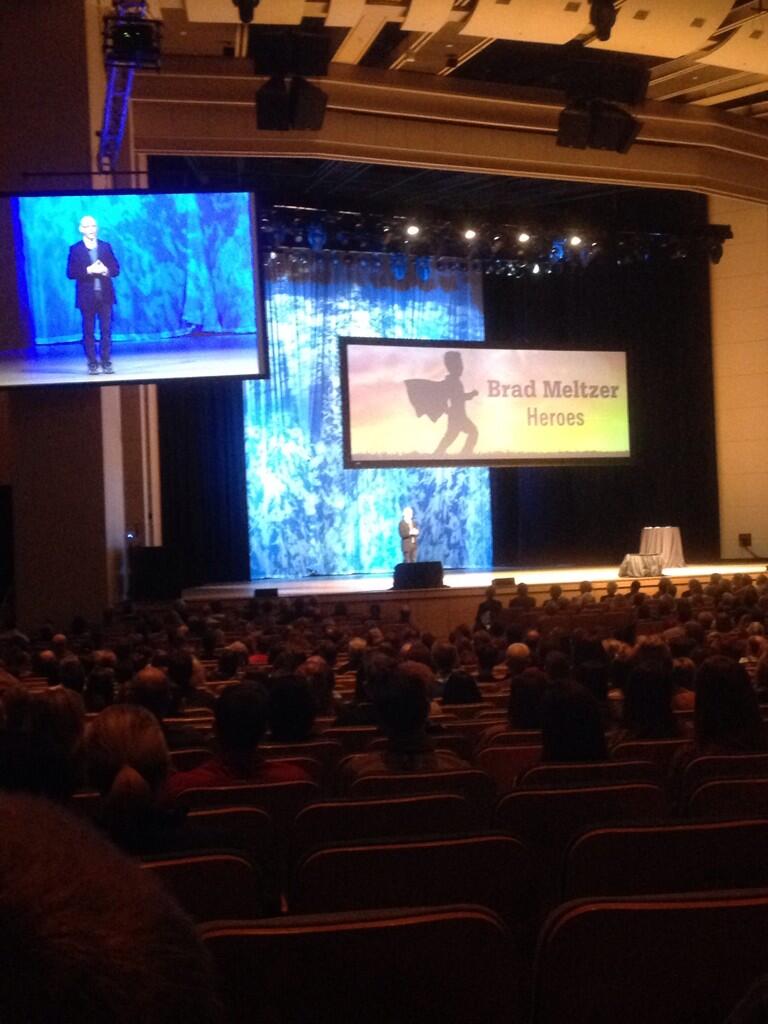
Friday kicked off early with a 7:30 general session by Brad Meltzer about Heroes. I am a huge fan of his Decoded series on the History Channel, but did not know why he would be speaking at  a middle level conference. He opened sharing his story about how he became a writer. Stories about his teachers filled the auditorium. He talked about the power of Thank You, and listening to the unheard stories for those are the ones with meaning. I was inspired by the end, Brad Meltzer is an engaging story teller.

For me the greatest experience of the conference was connecting with other like minded educators. As a classroom teacher, I have little time to connect and share ideas with others. Due to my activity on Twitter, I meet up with members of my Professional Learning Network. We talked in the halls, in session, on twitter and enjoyed meals together. These personal connections matter. I also had the privilege to attend the AMLE leadership lunch on Friday. The discussion there were rich with focus on students learning. The time was engaging and meaningful. Lead by Dru Tomlin, the lunch is a must for leaders that want to engage in answering the critical questions facing educators.

The conference wasn’t all roses: WiFi connections were spotty at times and the web app for the conference had issues. It was not light on the pocket book: I was out over $800 for travel and accommodations (Note to self find a sponsor for next year: anyone??) The money was worth it, the conference is not about the TECH so those were minor drawbacks. The conference was about connections, passion, energy all to make student’s learning improve in the classrooms.

All attendees have to remember to maintain the feelings from the conference, share the passion with your building and maintain connections with presenters via twitter. One member of my PLN shared that the energy felt at conferences can be continued by participating in Twitter chats. I hope I can live up to the energy and passion presented at the conference. If you have the time it is so worth attending. I hope to return next year when it will be in Nashville, TN,

Thank you to all I connected with! Dru Tomlin, Mark Clements and Rick Wormeli: Thank you for making me feel your equal. You inspire me to work harder and be better everyday.

#MSchat Schedule for November to January

All Chats are Thursdays weekly at 8 PM EST- Unless otherwise stated

Don’t know how to Chat? Check this out

Nov. 7- #AMLE2013 – Chat on Conferences and PD – Special Time due to AMLE conference 7-8 PM EST

Nov. 14- Parent Involvement:  The PT conference and Beyond

Nov. 21 -Student Engagement

Nov. 28 – Thanksgiving -No chat

Dec. 5th -Student Engagement

Dec. 12-Creating a culture of learning

Dec. 19-Celebrations in the Middle School

Dec. 26 -Boxing day No chat

Jan. 2-Goals, Resolutions and Challenges for the New Year

Jan. 9-How to refocusing students after breaks

Jan. 16- Gamification in the Middle School Classroom

Jan. 23- Strengthening Teams Through Technology-Special Chat event based on AMLE article.